Upperhill News

For Accurate Information

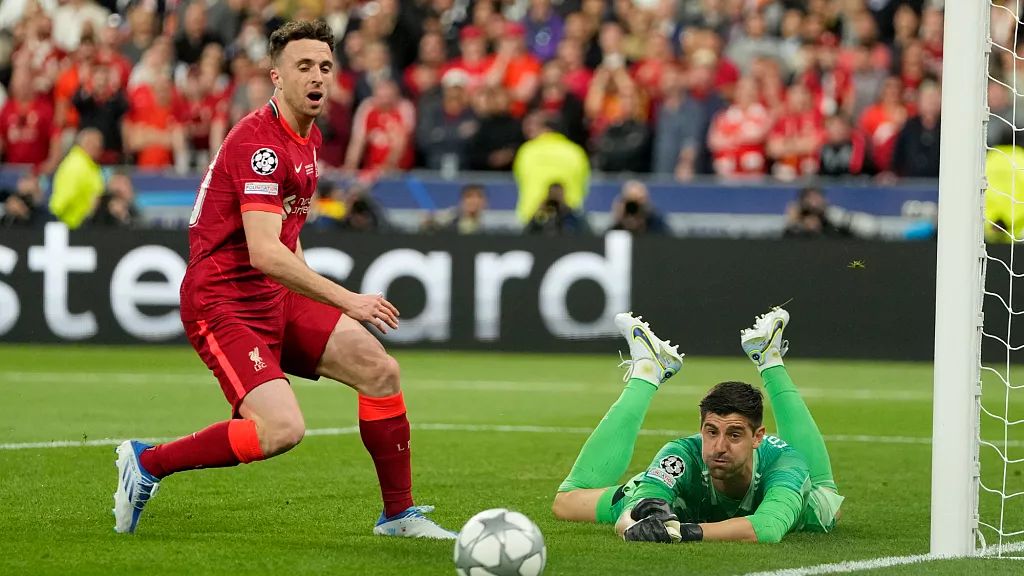
  • The Portugal and Liverpool winger, Diogo Jota, has died in an auto crash, which occured on Thursday.

    The road accident, which occurred  in the Spanish region of Zamora, claiming the lives of the 28-year-old Portuguese footballer and his brother, Andre Silva, the national football association has confirmed.

    Jota was involved in an accident overnight on Thurday when the Lamborghini he was travelling in veered off the road and caught on fire, according to authorities and media reports.

    The accident occurred at 00:30 on the A-52 near Sanabria in the municipality of Cernadilla. The Portuguese international’s brother André Silva — also a footballer who played for Liga Portugal 2 side Penafiel — was with Diogo Jota in the vehicle and also died at the scene, according to reports.

    “The Portuguese Football Federation and the entire Portuguese football community are completely devastated by the deaths of Diogo Jota and André Silva this morning in Spain,” the Portuguese FA said in a statement on Thursday.

    “We have lost two champions. The passing of Diogo and André Silva represents irreparable losses for Portuguese Football, and we will do everything to honor their legacy daily,” Portugese FA said.

    His club, Liverpool FC, also issued a statement on Thursday, saying they were “devastated by the tragic passing of Diogo Jota.”

    “Liverpool FC will be making no further comment at this time and request the privacy of Diogo and Andre’s family, friends, teammates and club staff is respected as they try to come to terms with an unimaginable loss.”

    “We will continue to provide them with our full support,” the statement said.

    FC Porto, where he spent a year on loan during the 2016-17 season, expressed its condolences following the news of Jota’s passing.

    “Porto Football Club is in mourning,” the club said in a post on X. “It is with shock and deep regret that we send our most sincere condolences to the family and friends of Diogo Jota and his brother André Silva, who was also our athlete in the youth categories,” the club stated.

    Pacey winger with an eye for the goal
    born Diogo José Teixeira da Silva, the native of Porto became known as Diogo Jota after choosing to wear “Diogo J” to distinguish himself from other players with similar names at his youth club Paços de Ferreira.

    Following a transfer to Atlético Madrid in 2016 — which involved a loan to Porto for the season — Jota’s stock quickly rose due to his lightning-fast pace and clinical finishing. He arrived at Liverpool FC in 2020 after a stint at Wolverhampton Wanderers, whom he helped gain promotion to the Premier League in 2017-18.

    Jota registered six goals and three assists in 26 appearances in the Premier League in 2024-25 with Liverpool, celebrating the club’s 20th league title in May.

    In addition to this year’s Premier League title, Jota won one FA Cup and one EFL Cup with the Liverpool-based club. He also won two UEFA Nations League titles with the Portuguese national team, for whom he played 49 games and scored 14 goals.

    He was an avid gamer, known for participating in esports tournaments, and also owned an esports team, Luna Galaxy. In 2021, he briefly became world number one in the FIFA 21 football game.

    His triangle gesture, as well as his goal celebration in which he’d mimic sitting down with a video game controller, were both in homage to the EA Sports series.

    Jota married his long-time partner Rute Cardoso less than two weeks ago, on 22 June. The couple had three children.


  • The Anambra State Commander of the National Agency for the Prohibition of Trafficking in Persons (NAPTIP), Ibadin Judith-Chukwu, has disclosed that human trafficking is assuming an increasingly disturbing dimension, as youths in the state are now in the business of cohabiting to produce babies for sale.

    Judith-Chukwu raised this alarm during an interview with journalists in her office in Awka, saying that young people have resolved to mutually consenting to cohabit with the sole aim of getting pregnant in order to sell babies after delivery.

    She said the agency has established the state task force to curb human trafficking in the rural areas, where the practice is most prevalent.

    According to her, “we have seen situations where a girl gets pregnant, and then someone suddenly presents a marriage proposal.

    “After she gives birth, often without her knowledge or consent, the man takes the baby and sells it,” she said.

    Judith-Chukwu, who lamented that the sale of babies is more prevalent in rural communities, emphasised the need for widespread public enlightenment, particularly among residents of remote areas.

    “I can say that NAPTIP has performed fairly well by establishing state task forces. These task forces are addressing crimes specific to each state, especially those related to human trafficking.

    “The task force in Anambra State is active and being equipped to handle the situation.

    “Since its establishment in 2020, the Anambra State Task Force on Human Trafficking has initiated various activities, including public sensitisation campaigns, to raise awareness about the trends and patterns of human trafficking,” she said.

    The NAPTIP Commander added that both the agency and the task force are committed to informing and educating the public about the deceptive tactics used by traffickers.

    She called on traditional rulers, religious leaders, and other influential figures to join the fight against the so-called “organised crime”.

    “We are engaging critical stakeholders such as sister law enforcement agencies, religious bodies, and community groups to ensure the message gets to every corner of the state.

    “We are also looking forward to the August meeting, which presents a valuable opportunity for intensive sensitisation,” Judith-Chukwu added

  • The Imo State Police Command in Nigeria says it has rescued 12 minors and arrested a 42-year-old woman, Ann Ngozi Enyenwa, believed to be the ringleader of a child kidnapping and trafficking syndicate.

    Imo State Commissioner of Police, Aboki Danjuma,who condemned all forms of child trafficking and abuse, empasized the commitment of the Command to safeguarding the rights and dignity of every child in the state.

    This was revealed in a statement by the the Police Public Relations Officer in Imo State, Henry Okoye on Sunday.

    Okoye said the operatives through an intelligence-led stop-and-search operation arrested Enyenwa of Umudim Ohekelem in the Ngor-Okpala Local Government Area of Imo State on June 20th along the busy Owerri-Aba Express Way.

    He said the arrest led to the smashing of a child trafficking network that used children for streets begging in Aba, Abia State, purported to be for a motherless babies home in Rivers State.

    The Police spokesperson said the proceeds made by the children from begging were allegedly sent to Shalom Motherless Babies Home in Okenyi, Rivers State, where Ann Ngozi Enyenwa claimed to be employed.

    According to him, the suspect had already confessed that the children were trafficked from Ngor Okpala in Imo State to Aba in Abia State, where they were forced to do streets begging.

    “The Imo State Police Command, through an intelligence-led stop-and-search operation, has arrested one Ann Ngozi Enyenwa, 42 years old, of Umudim Ohekelem in Ngor-Okpala LGA, on 20th June, 2025 along the Owerri-Aba Express Road and rescued twelve children suspected to have been abducted.

    “This arrest led to the uncovering of a disturbing child trafficking network that exploited minors for street begging in Aba, Abia State.

    “Upon her arrest, the suspect was found with several children whose appearance and condition immediately aroused suspicion. Consequently, the case was referred to the IGP X-Squad Unit for discreet investigation.

    “During interrogation, the suspect confessed to trafficking children from Ngor-Okpala LGA to Aba, where they were coerced into street begging. She further disclosed that proceeds from their activities were allegedly sent to Shalom Motherless Babies Home in Okenyi, Eche LGA, Rivers State, where she claimed to be employed.

    “As a result of the operation, twelve children between the ages of 5 and 13 were rescued. Their alleged names are as follows: Chinyere Nnaralaeze (10), Favour Madufor (13), Ugochi Pius (13), Ifeanyi Pius (9), Favour Timothy (10), Solomon Ihechi Chinuike (7), Chinaza Madufor (10), Nneoma Timothy (9), Promise Maduenyenwa (5), Gospel Chibuike (9), Chinedu Maduenyiwa (11), and Chinonso Paul (10)—all from various communities in Ngor-Okpala LG,” he said.

    Assuring that the children were currently in safe custody,  the Police spokesperson noted that efforts were in top gear in collaboration with relevant agencies to identify and reunite them with their biological families.

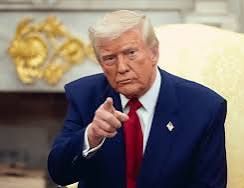
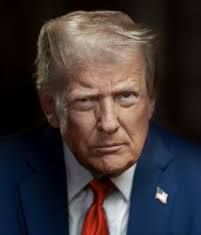
  • The United States President Donald Trump,  in a new move has expressed his decision to end  all trade discussions with Canada as a way of hitting back at Ottawa for slapping a tax on web giants.

    Trump said the taxes must be removed before the resumption of negotiations with Canada on trade-related issues.

    Canada and the US have been engaging in conversations to get Trump lift his punishing tariffs on Canadian goods, levies that have already resulted in major economic dislocations, job losses and a drop in southbound exports.

    The US President and Canadian Prime Minister Mark Carney, last weet at the G7 Summit held in Alberta, concluded to reach some agreements  on the trade dispute within the space of 30 days.


    Speaking in the Oval Office on Friday afternoon, Trump noted that the US has “such power over Canada,” and that he is displeased the country is following a taxation strategy similar to Europe’s.

    In his words: “It’s not going to work out well for Canada. They were foolish to do it.”

    He mentioned his plan to impose the DST, which was passed into law last year with a delayed application.

    “We’re going to stop all negotiations with Canada right now until they straighten out their act,” Trump said, just as he added that the only solution on the part of Canada for Ottawa to remove the tax.

    Assuring that Canada will accede to his request, the US President pointed out that, “They do most of their business with us. When you have that circumstance, you treat people better.”

    Earlier, Trump posted on social media that he may impose some blanket tariffs on Canadian goods as retribution for the DST, which will primarily hit U.S. firms since it targets only the biggest earners.

    Speaking with news men, Prime Minister Carney said his country will continue to conduct complex negotiations in the best interest of Canadians.

    “We’ll continue to conduct these complex negotiations in the best interest of Canadians,” Carney said. He did not address a reporter’s question about whether his government is prepared to drop the DST — something the Business Council of Canada is calling on Ottawa to do in exchange for US tariff relief,” he said.

    The DST, which is set to take effect on June 30, will have US companies like Amazon, Google, Meta, Uber, and Airbnb pay a three per cent levy on revenue from Canadian users. The policy will apply retroactively, leaving US companies with a $2-billion US bill due at the end of the month.

    These global digital firms are often able to skirt paying taxes in the countries where they operate, and the last Liberal government pitched the DST as a way to bring the tax code up to date and capture revenues earned in Canada by firms located abroad.

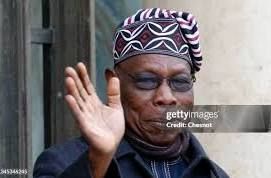
  • Former President of Nigeria,  Chief Olusegun Obasanjo has said many African leaders do not possess the basic understanding of economics required to effectively govern their countries.

    Obasanjo said that such ignorance contributes to the continued dependence on foreign aid and persistent underdevelopment in Africa.

    He made this known on Thursday during a panel session at the Afreximbank Annual Meeting with the theme, “African Renaissance in an Era of Turbulence: Are the Lions Still on the Move?”

    The session was moderated by CNBC Africa’s Senior Anchor, Ms Fifi Peters.

    Berating the level of economic ignorance among African leaders, Obasanjo asked, “How many of our leaders even understand basic economics to be able to run the affairs of their country?

    “Look at how we go about borrowing money and wasting money. Waste and corruption—they are strange bedfellows of development. And that is what most of our leaders engage in,” he said.

    The former President lamented that some African countries have the population and resources to lead development but for moving in the wrong direction.

    He named Nigeria, Egypt, Ethiopia, the Democratic Republic of Congo, and South Africa as the continent’s “lions,” alongside Kenya, Senegal, and Morocco, but said these countries except for one or two are not really moving as they should. 

    “The lions are there. They are not moving as they should be moving. And they have to move as they should move before you get Africa really as a continent moving as we expect it to move,” he said.

    Adding that economic stagnation in these countries is partly due to political instability and weak institutions, Obasanjo said that it is impossible to talk about economics without mentioning politics, which he said is the master of economics.

    He also blamed Africa’s elite for copying Western political systems wholesale without adapting them to local realities.

    “Western liberal democracy, which we inherited from our colonial masters, needs to be internalised and interrogated. In most African languages, opposition is the enemy. Where do you talk of a loyal enemy?”

    “Our democracy is a monocracy. Not democracy. Monitocracy. Which means you buy… You will buy for everybody. And you will be the treasurer. And then you will… and the money that comes in will, of course, go into your pocket.”

    According to him, African societies traditionally relied on communal decision-making and consensus rather than adversarial politics.

    “In the African system, we never talk of opposition. We sit down. We look at everything. We argue. And when we argue, we get consensus. Communalism. Not opposition and government.

    “Now, I believe the time has come for us to say, hey, it’s not working for us. Even for them, it’s not working.”

    “We have lived too long on aid. Is aid the way that Africa should be expecting? I don’t believe so. Now, if that is the case, what should we substitute for aid?”

    “We run to Japan. We run to China. And all the African leaders run to China. For how much? China will give up $20bn. $20bn, which a country in Africa can produce more like that,” he pointed.

    Despite the criticisms, he cited Ethiopia’s post-war wheat exports as evidence that African countries can achieve meaningful development.

    Obasanjo also praised Afreximbank’s initiative to promote intra-African trade using local currencies, urging central banks to support it.

    “For what reason do I have to look for euro or dollar when I’m buying milk in Uganda? Uganda produces over 5 trillion litres of milk. Nigeria needs that milk. Now, for me to be able to buy milk from Uganda, from Nigeria, I will have to go and look for euros and dollars.”

    “The milk producer in Uganda doesn’t want my euro, he doesn’t want euro and dollar. He wants Uganda and Chile. But why can’t we pay him in Uganda and Chile? I have my own Naira, and then I’m paying Naira.”

    He concluded, “Let us learn from ourselves and among ourselves, and let us then get the lions to move. And when the lions move, the cubs will follow the lions, and they will move together.”


  • The Canadian government has introduced an updated list of eligible fields of study for international students in non-degree programs, making it 929 fields of study altogether.

    A total of 119 new fields of study are introduced  for Post Graduate Work Permit, just as 178 fields have been removed from the list.

    This move is part of  efforts further to streamline immigration pathways, particularly through the
    Express Entry and address critical shortages in key sectors, including healthcare, education, and skilled trade.

    This latest comprehensive guide explains the details of the updated PGWP requirements, the implications for international students, and offers insights into how these changes could shape Canada’s immigration landscape.

    Under the healthcare and social service, nursing, medical laboratory technology, and social work were included in the list.

    Early childhood education, teaching assistant programs, and other education-related fields also made the list while the skill traded included
    programs in carpentry, electrical work, plumbing, and other vocational trades.

    Students in these fields who applied for a study permit before June 25, 2025, will still be eligible for a PGWP if their program was on the list at the time of their application.

    The full list, organized by the Classification of Instructional Programs (CIP) system, is available on the official government website.

    To ensure fairness, students who applied for a study permit before June 25, 2025, remain eligible for a PGWP if their field of study was on the eligible list at the time of their application, even if it has since been removed.

    However,  international students who submitted their application for PGWP before November 1, 2024 are exempted from the new policy.


  • The Iranian President Masoud Pezeshkian has
    formally announced the “end of the 12-day war” imposed by Israel, the IRNA news agency confirmed. 

    Israel-Iran was which began on June 13, was aimed at preventing Iran from acquiring a nuclear weapon, an ambition Tehran has long denied holding

    In a message to the nation on Tuesday, Pezeshkian said the nation was witnessing the establishment of a truce, which, he said, informed the need to end the war.

    He commeded the heroic resistance of his country against adventurism and provocation of Israel.

    “Today, after the heroic resistance of our great nation, whose determination makes history, we are witnessing the establishment of a truce and the ending of this 12-day war imposed by the adventurism and provocation” of Israel, Pezeshkian said.

  • The U.S. Supreme Court cleared the way on Monday for President Donald Trump led administration to resume deporting migrants to countries other than their own without offering them any chance to show harms they could face.

    This move handed Trump another victory in his aggressive pursuit of mass deportations.

    The justices lifted a judicial order that required the government to give migrants slated to be deported to so-called third countries any meaningful opportunity to tell officials they are at risk of torture at their new destination while a legal challenge plays out.

    Boston-based U.S. District Judge Brian Murphy had issued the order on April 18.

    The Supreme Court decision was unsigned and came with no reasoning, as is common when the high court decides emergency requests.

    Opposing the judgement, Justice Sonia Sotomayor, joined by the court’s two other liberal justices, criticized the majority’s decision, calling it a “gross abuse” of the court’s discretion.

    Sotomayor warned that the court’s action exposed thousands to the risk of torture or death.

    “The government has made clear in word and deed that it feels itself unconstrained by law, free to deport anyone anywhere without notice or an opportunity to be heard,” she wrote in the dissent, joined by Justices Elena Kagan and Ketanji Brown Jackson..

    U.S. Department of Homeland Security spokesperson, Tricia McLaughlin suggested third-country deportations could restart soon.


    “Fire up the deportation planes,” she said in a statement, calling the decision “a victory for the safety and security of the American people.”

    After the department moved in February to step up rapid deportations to third countries, immigrant rights groups filed a class-action lawsuit on behalf of a group of migrants seeking to prevent their removal to such places without notice and a chance to assert the harms they could face.

  • Eleanya Ucheya, a Nigerian lifestyle content creator, has affirmed that life abroad is superior with just $5,000 compared to having N30m in Nigeria.


    He also said that the instability of  Nigerian economy has put greater pressure on N30m, thereby making it to vanish within the shortest time, just as he pointed out that $5,000 retains more value overseas even in the face of inflation.

    Ucheya who shared these views in a recent TikTok video, identified insecurity, poor policies and multiple taxation as some of the issues that contribute to the decline of the naira value.

    According to him, one bad policy can just bring your money down.

    ” I am not even talking about insecurity, which can destabilise you. Even as a business person, maybe you have N30 milllion, do you know that one fire outbreak can reduce you to nothing because no insurance.

    “That person with $5,000 abroad can use that money to buy the latest car, he might just deposit maybe $1,000. He can buy on loan or lease, maybe in three years time, he takes the car back to them, he’ll just be paying small money.

    “But that your N30million, may be you’re a businessman, tomorrow state will come for one tax, local government is coming, agbero is coming, police on the road is coming.

    “Even if you want to pay for your child school fees from the money, after paying for the school, you pay for lesson teacher that will still come to your house and eat,” he said.

    Ucheya’s submissions have sparked an argument on TikTok as many agreed with his position, while others opposed his views, saying N30m can set up one for life in Nigeria if well managed.


  • In the days of the Late Prof. Dora Akunyili as the Minister of Information,  rebranding Nigeria was a major project that caught people’s attention. Indeed, no matter how good a product or initiative is, if it is not given an excellent branding, it is as good as the dusty book on the shelf.

    No doubt, Nigerians naturally are easily noticed by virtue of our make-up. We are wired to announce ourselves even when we don’t deliberately intend to make a noise.  There some nationals that are not on the fast lane of social interactions as much as we do. In fact, our presence as Nigerians could be intimidating to some others.

    We have the skills. We have the energy. We have the resilience.  Our educational status is another advantage that makes it difficult for anyone to see us as pushovers. Name any corner of the world, even the hard to reach places, you will always see Nigerians thriving there.

    Our music has become a major export commodity to the world. We have quite a number of young men and ladies who are more or less idols in the music industry. These musicians tour the world, singing to the delight of the global audience.  We have some of our musicians sing at the highest stages of the world such as World Cup, Olympics and the likes.

    I watched a documentary on CNN some weeks ago, where in the far away Saint Kitts and Nevis in the Carribeans, David Adeleke’s(Davido) name was engraved in their national museum. The presenter asked citizens of the country the rationale behind it, they gladly affirmed that it was their own way of honour such a music icon.

    Our movie industry too is doing greatly. In fact, we have Nigerian movies being watched in the airplane by non-Nigerians. Our movies have become export commodities. In addition, the use of short videos and skits via the social media has made Nigerian artistes gain prominence globally since citizens of various nations find it interesting.

    Little wonder, they say Nigerians are the happiest people in the world.  We make jokes out of every thing.  It is true that the challenges facing the country are huge but the manner we douse the tension is out of the world.  Our resolve is, “we cannot come and go and kills ourselves.” Hence, the need to laugh away our sorrow.


    Nigerians in recent years have crafted and coined numerous slangs and phrases which are being celebrated and used across the globe even by people who do not know its meaning. For instance,  the famous “Emi lokan” by President Bola Ahmed Tinubu.

    He declared “Emi lokan” during his electioneering campaign visit to Abeokuta, Ogun State before the All Progressives Congress Presidential Election Primaries.

    I met a Columbian man not long ago whose nickname was “Oloso”. I was curious to ask if he knew the meaning. He confidently responded in the affirmative and expressed his love for Nigerian originated phrases.

    The shout of “wahala-wahala” by the controversial musician, Habeeb Okikiola (Portable) was always what an Eritrean uses to greet his Nigerian friends at work.

    There are too many examples to give in this regard. But the fact remains that Nigerians are standing on a higher pedestal when it comes to entertainment and the use of our God-given public relations prowess as a people. This is apart from the strength of our population and popularity on the African continent.

    However, it is not new that there are always issues to grapple with in every human setting. As such, there is no nation without its challenges.  Mention a mega nation without a problem. It is not always as green as you think the greener pasture is. 

    It is therefore necessary to ensure we channel this strength in the direction that will not demarket our nation and our self-esteem as a people by “majoring” on our strength and selling same to the world.

    There is this Yoruba saying that, “it is the manner a calabash owner calls its calabash that oursiders and prospective buyers will call it.” If you give your calabash a name near horrible. you should not expect others to call it white.

    According to the Bible,  the Almighty God gave Adam the permission to name creations, “…and whatever the man called each living creature, that was its name.”

    It is not that the challenges are not there. We just have to tackle it within and not wash our dirty linen outside.  I doubt if any country in Africa uses the social media effectively as much as Nigerians.  Let’s saturate the social media with good messages about our country and what we stand for as a people.  We can make it a culture and pledge to spread only good things about our land.

    Since we understand we are the center of attraction in Africa, let’s leverage our music and nollywood industries as well as social media and other means of communication to spread good news about our country.

    There is a way a well branded nation attracts honour, respect and investments from the international stage and its people will be better for it.  With our collective branding efforts, our Nigerian passport will be celebrated.  We will no longer be treated as rags at various international airports or ports of entry. Our common brand is Nigeria. We can make it globally attractive. 

    Femi Onasanya, a public affairs analyst, wrote via femibimboo@gmail.com.