Upperhill News is committed to promoting accurate information on African stories, issues relating to the Girl-child, gender-based violence, health, politics, sports as well as national and international events of public interest.
…Highlights the importance of recognizing, promoting and inspiring incredible achievers in the world
ABEOKUTA CITY — As the planning of the annual recognition of the incredible achievers in Ogun State begins today under the auspices of AMEBO NEWSPAPERS NG. a subsidiary of AMEBO NEWS HUB, The Managing Editor, Solanke Ayomideji Taiwo has expressed readiness in the area of nomination and recommendation of outstanding personalities based on their respective performances in the year past to uplift the people of Ogun State.
He said, The categories for the awards shall be released as soon as possible, while the nominees shall be receiving the information on the mode of voting to incorporate them into the ongoing contest. While we await the winners among the categories after the duration of the voting exercises.
Solanke while speaking with newsmen highlighted the importance of the awards to the awardees and to Ogun state, He said ‘Awarding incredible achievers in a state serves several important purposes that can greatly benefit both the individuals recognized and the broader community.” He added.
Here are some compelling reasons we are considering:
Recognition of Hard Work and Dedication: Achievers often invest countless hours, effort, and passion into their pursuits. The Awards will validate their hard work and provide public recognition of their accomplishments, motivating them to continue striving for excellence.
Inspiration for Others: Recognizing outstanding individuals in Ogun will sets a positive example for others in the community. Their stories can inspire others to pursue their goals and dreams, fostering a culture of ambition and perseverance.
Community Pride: When local achievers are celebrated, it will enhance community pride and cohesion. Residents can feel a sense of belonging and unity, knowing that their neighbors are making significant contributions to society.
Encouragement of Innovation and Excellence: AMEBO NEWS HUB Awards will encourage individuals to innovate and excel in their respective fields. By highlighting achievements, the state promotes a competitive spirit that can lead to advancements in various sectors.
Attracting Talent and Investment: We are ready to publicly recognize and rewards achievement to attract talented individuals and businesses. This recognition will create a positive image of the state as a place where success is valued and supported.
Building Networks: Award ceremonies often bring together achievers from different fields, fostering collaboration and networking opportunities. This awards will lead to new partnerships and initiatives that benefit the community.
Highlighting Diverse Achievements: AMEBO NEWS HUB Awards will shine a light on a wide range of accomplishments, from arts and sciences to community service and entrepreneurship. This diversity will showcase the multifaceted nature of achievement and encourages a broad array of talents.
Promoting Values and Ethics: By awarding achievers who exemplify strong values and ethics, the state will promote these qualities within the community. Recognizing integrity, service, and social responsibility sets a standard for others to aspire to.
Legacy and Memory: The Awards will create a lasting legacy for both the recipients and the community. serving as a reminder of what can be achieved and can inspire future generations to follow in the footsteps of those who have been honored.
Boosting Morale: Celebrating our incredible achievers will further boost morale not just for the individuals receiving the awards but also for the community as a whole. It will create a positive atmosphere and encourages a collective sense of achievement.
In summary, awarding incredible achievers is a powerful way to recognize individual contributions, inspire others, and foster a culture of excellence within the community. It will reinforces the values of hard work and dedication while promoting the importance of collective success.
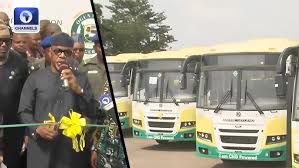
Transportation is one of the fundamentals of development, and access to same, remains pivotal to the growing of the economic and social derivatives of any strategic effort at bringing about the kind of expansion and progress that the present administration under the leadership of Prince Dapo Abiodun, is working assidulously to entrench in Ogun State. From time immemorial, parameters that guarantee effective transportation in all evolving societies have defined the extent to which such societies advance in all developmental spheres; whether it be with respect to diplomacy, trade and commerce, investment opportunities and its attraction of would-be investors among others. First up, the State Government, recognizing the importance of good road network as a veritable imperative of durable transportation, embarked on the construction and rehabilitation of roads throughout the State. This has led to the construction and rehabilitation of more than 600 kilometers of roads throughout its nooks and crannies. And with a vibrant collaboration with the Federal and Local tiers of Government, rural roads are being opened up, particularly with the support of the Rural Agricultural Access Mobility Programme, (RAAMP). This is with a view to ensuring easier movement of produce from the farm to markets. Furthermore, the creation of a full-fledged Ministry of Transportation, from the now defunct Bureau of Transportation, represented another, in a series of structural realignments embarked upon by the State Governor, geared towards the commencement of initiatives that would help engender a systematic transport mechanism in our State. Then, the government embarked on the very bold initiative of constructing the Agro-cargo airport in Iperu, a feat which was achieved in record time, with regular commercial flights billed to commence anytime soon. As all necessary preparations continue to take shape, for the commencement of commercial flights, allied structures such as an agro-processing zone, a housing estate, offices of line agencies such as the Immigrations and Customs, along with the National Drug Law Enforcement Agency are being constructed, leading to the establishment of an aerotropolis in our state. The State Government, responding to the effects of the removal of fuel subsidy by the Federal Government, as part of the economic reforms put in place by President Bola Tinubu, contracted foreign technocrats to convert some of the Government-owned automobiles from fuel combusted engines to natural gas. By this, Ogun State became the first to introduce CNG-enabled vehicular machines into its fleet. Since then, the workers’ bus, and a host of vehicles plying the intra-state corridors are being run on Compressed Natural Gas. And when the Ogun State Governor Prince Dapo Abiodun, was commissioning the CNG-vehicles, he pledged the introduction of electrically powered automobiles into the State transport architecture. Tagging this ‘’The State E Mobility Programme’’, it was billed as a means of lessening the burden of cost to the commuter, owing to the high cost of fuel. Much more however, it has become extremely desirable, as a result of its environmentally friendly potential, thereby mitigating the negative effects of fossil fuels on the state eco-system, Thus, reducing its effect on climate change. On Wednesday, the 31st of July, Prince Abiodun, actually launched e-bikes and tricycles, under the Ogun State E-Mobility Programme. This launch at the Governor’s Office Arcade Ground, Oke-Mosan in Abeokuta, represented the introduction of the first phase of 2,000 electric motorcycles by the State Government, in its resolve to make lives more bearable for citizens of the State, thus mitigating the impact of the removal of subsidy on petrol. Apart from the foregoing, it is hoped that the programme would reduce the cost of transportation, bringing about cleaner environment by reducing carbon emissions. Launching the Programme, Prince Abiodun affirmed that E-Mobility heralded another milestone in his avowed commitment towards ensuring sustainability of the State’s socio-economic development. He stated that the investment would be in three phases: “beginning with phase one, with a focus on our e-Okada bike assembly, phase two with the tricycles and phase three with our e-vehicles, providing 10,000 direct jobs and 50,000 indirect jobs with assembly line operators”. Reaffirming his administration’s commitment to mitigating the impact of the subsidy removal, which has understandably led to the high cost of diesel fuel also, by doing all he can to ensure the reduction of transportation cost on citizens; the Governor opined that he had led the country in the energy transition agenda; being the first state to launch and deploy Compressed Natural Gas (CNG) Buses in the Mass Transit Buses routes. Reiterating the successful conversion of buses from the usage of fuel to Compressed Natural Gas by his administration, the Governor announced the obvious; that the buses were currently deployed on the Ita-Oshin-Adatan route in Abeokuta, Mowe-Ibafo to Lagos and other routes, serving residents in these corridors and reducing transportation fares drastically. “We will be launching about 2,000 e-bikes for the first phase. These commercial motorbikes can ride up to 75-80 kilometres on full charge and the vehicles up to 200 kilometres, thus reducing transportation cost by 40 percent. “We aimed to reduce our carbon footprint and bring about a significant change in how we think about transportation of our daily lives. This aligns with our energy transformation programme for a cleaner and healthier environment for future generations.” “Through this launching of electric bikes, tricycles, vehicles, motorcycles and the battery swap stations at specific points, we are not just introducing a new mode of transportation, we are pioneering a movement towards a cleaner, more efficient and technologically advanced way of life.” In the meantime, it can be worrying to observe that one of the greatest potential challenges posed by the introduction of new policies or programmes into the Nigerian socio-polity, is that of sustainability. An astute businessman such as Prince Abiodun, has never been lost on this, as an important component of success in his programme agenda for the State’s development. You recall that such acumen has already found expression in the idea of an aerotropolis in Iperu, implying the development of a city, with the airport being its center-piece. In the same vein, the Governor, in launching the e-bikes and electric tricycles, announced the ground breaking of a new facility, named Giga Facility, at the Special Agro Processing Zone located at Iperu-Remo. In making this announcement, the Governor stated that the facility with a total investment sum of 40 million Dollars, would be an assembly plant for the electric bikes, two wheelers, tricycles, commercial buses, electric cars and swap stations also. Happily, the launch was witnessed by the Minister of Transportation, Senator Seidu Alkali, an indication of the significance of the event as an epoch-making one. Understandably, the Minister lauded Ogun, for being the first State to launch such a programme, adding that it had joined other African countries currently making use of more than 15,000 e-bikes as part of their transport architecture. Asserting that apart from the fact that the programme would revolutionize the transportation sector in the state in particular and the country at large, it would also provide alternative means to fuel and reduce cost. Senator Alkali, therefore urged other state governments to take a cue from Ogun in partnering with the Federal Government in CNG usage. He also called on members of the public to support the programme which is guaranteed to create jobs, while making transportation cheaper, efficient and eco – friendly. Coming as a follow up to the conversion of mass transit to CNG buses last year, towards addressing increase in transportation fare occasioned by subsidy removal, the Prince Dapo Abiodun led administration in the State, is by the introduction of Electronic bikes and electronic tricycles, in addition to other important strategic policies and programmes, is slowly but surely, demonstrating a firm commitment to a sustainable revolution in the Transportation sector, which will overtime further the entrenchment of its status as the nation’s investment destination of choice for the proletariat, bourgeois and perhaps the elite also.
Akin Akinyemi is a Civil Servant, writing from Abeokuta. Akinoakins@gmail.com
The Permanent Secretary, Ogun State Ministry of Industry, Trade and Investment, Dr. Olu. Ola. Aikulola has been listed among the ‘Ogun State 50 Top Role Models’.
Aikulola was honoured alongside 49 others with the publication of his contributions to humanity in the third volume of the ‘Ogun State 50 Top Role Models’, a memoir on outstanding personalities in the State published by the Prestige Newspapers.
Some of the other eminent personalities who were also honoured include former Nigeria’s High Commissioner to the United Kingdom, Ambassador Sarafa Ishola, Ogun State Head of Service, Mr. Kehinde Onasanya, ace broadcaster Mr. Eddy Aina as well as the General Manager, Ogun State Broadcasting Commission, Mrs. Toyin Sogbesan among others.
Speaking during the launch of the memoir at the Nigeria Union of Journalists (NUJ) Hall, Iwe-Iroyin, Abeokuta, the Publisher, Prestige Newspapers, Mr. Dada Olanipekun who co-authored the memoir with Mr. Moshood Adebayo said the book has been published to celebrate personalities who have selflessly contributed to humanity and community irrespective of age or State of origin.
The Publisher disclosed that the list of the honourees was meticulously compiled adding that many personalities whose contributions were unverifiable or questionable were exempted from the publications.
“Initially we planned to run up to 100 personalities but we had quite a problem on how to reduce the list to 50. There were some we had to yank off the list based on the information we gathered about them because we do not want to parade any non-entity. Those selected are the people who have contributed genuinely to humanity and the growth of Ogun State,” the veteran journalist said.
He urged Nigerians to embrace the habit of celebrating outstanding personalities and writing memoirs which would help to preserve the knowledge of contributions of people who made impact in the lives of others adding that Nigeria’s former President, Chief Olusegun Obasanjo also inspired the publication of the ‘Ogun State 50 Top Role Models’.
“We are publishing these series because we want to challenge our elites to write their memoirs or autobiographies. There is a need for it. We are imploring you for the generation to come so they will be able to read more about what you have done,” he said.
Speaking in an interview, Aikulola lauded the Prestige Newspapers for the recognition pointing out that he remains steadfast on maximising the grace of being alive by impacting lives.
Aikulola, who is also the Chairman, Ogun State Committee on Export Promotion appealed to people to make impact-driven life and service to humanity the driving force of their actions and decisions.
Ogun State government has sought the assistance of the German Agency for International Cooperation (GIZ), to engage youths in the state in demand-driven needs like Artificial Intelligence skills, to make them better prepared for employment opportunities that were obtainable locally and internationally.
The state Deputy Governor, Engr. Noimot Salako-Oyedele, made the call when she received members of the Local Organising Committee (LOC) of the maiden Ogun State Employment Conference, led by its Chairman and Permanent Secretary, Ministry of Industry, Trade and Investment, Dr. Olu. Ola. Aikulola, in company of Permanent Secretary, Public Service Transformation Office (PSTO), Mr. Jola Oyeneye, Special Assistant to the Governor on Youth Development, Mr. Abiola Odetola, representative of the GIZ, and other committee members in her Office in Oke-Mosan, Abeokuta.
The LOC members were at the Deputy Governor’s Office to present the report of the Ogun State Employment Conference, held between October 11 and 12, 2023, as well as create awareness on the proposed hybrid Job Fair programme.
Engr. Salako-Oyedele said youths should be empowered with relevant and marketable skills that would help them take advantage of new technology, urging GIZ to ensure effective marketing of its Skills Development for Youth Employment Project and a ‘’Train the Trainers’’ programme, to enable many youths to benefit.
“I am pleased to hear that the GIZ intervention has been extended till November, 2026. I believe the extension will afford more youths across the State to benefit more from your impactful intervention’’, she said.
Engr. Salako-Oyedele, who commended efforts of LOC for the report, noted that the event had impacted lives of youths, promising to work with the committee and the GIZ subsequently.
Earlier, Dr. Olu. Ola. Aikulola, said report of the committee was forwarded for government to implement its recommendation, adding that the proposed Job Fair would be an inclusive Fair which would be technologically-driven, and help build on the gains of last year’s conference.
Also speaking, Technical Advisor, Employment Promotion, Skills Development for Youth Employment, GIZ, Mr. Amile Terlumun, said the Employment conference provided insights which were used to plan the next phase of the Skills Development for Youth Employment programme which would run until November, 2026.
He called on government to implement the recommendations, adding that they align with the drive of the State government towards empowering youths with requisite skills.
Meanwhile, the LOC also met with the Commissioner for Education, Science and Technology, Prof. Abayomi Arigbabu and the Commissioner for Budget and Planning, Mr. Olaolu Olabimtan, to present the report and advocate support for the upcoming Job Fair.
In commemoration of the YEAR 2024 World Day for Grandparents and the Elderly, Our Lady Seat of Wisdom Catholic Church , Adigbe, Abeokuta has held a special Get-Together to celebrate elders in the Abeokuta Diocese charging them to avoid sins associated with old age which could lead them into becoming too possessive and over demanding.
The World Day for Grandparents and the elderly was introduced in the Catholic Church across the world by Pope Francis in honour of Joachim and Anne, Jesus’ grandparents. This year’s edition is themed, “DO NOT CAST ME OFF IN MY OLD AGE ” as established in Psalm 71 verse 9.
The Parish Priest of the Diocese, Rev. Father Gabriel Oyebola gave the admonition during the Get-Together for Grand Parents and the elderly, organised by the Education Committee of the Parish at the Bishop’s Court, Onikolobo, Abeokuta.
Fr. Oyebola stated that some elders in their desire to help others tend to make different demands which are not necessarily their personal needs urging them to build the habit of overlooking some issues.
“There are things that they call the sins of old age. The first one is that you learn to take your eyes off some things. At this age there is the tendency to always “grab” and from experience most of the Grandpas and Grandmas are not the ones who use or need those things. Meanwhile , you can only assist people within the limit of your ability”, Fr. Oyebola said.
Oyebola also added that this year’s theme is a reminder that God is available for the elders while the Church cherishes and views them as important to its development.
He added that the Parish would with effect from the month of August 2024 commence mid-day mass for the elderly once in a month.
The clergy appealed to children not to be individualistic but take good care of their parents while alive instead of waiting to hold lavish parties for them when they pass away.
Rev. Father Oyebola commended the Chairman and members of the Parish’s Education Committee for consistently organising impact-driven programmes which have been benefiting the Church.
Also speaking, the Chairman of the Education Committee, Dr. Olu. Ola. Aikulola said the celebration of the World day of Grandparents and the elderly in the last two years has been a worthwhile experience in the Parish enabling the elders relish old experience, rejig their energy and gain more knowledge on how to overcome their peculiar challenges in view of their old age assuring that the Committee would continue to organise the programme as well as other impactful events to meet the needs of women, men, youths, children, workers and other stakeholders in the Church.
Aikulola who is also the Permanent Secretary, Ogun State Ministry of Industry, Trade and Investment also reiterated the call for the aged to deliberately overlook some development so as not to overburden themselves and others around them advising them to be positive and prayerful about their children as well as relate with their grandchildren without overburdening themselves.
In her lecture, titled “STRESS MANAGEMENT FOR OLDER ADULTS ” a Counselling Psychologist, Mrs. Funmilayo Esiri said stress is a psychological response to an internal and external pressure which a person is unable to cope with, advising the elders to avoid stress triggers or stressors like anxiety , loneliness and depression among others which may result in sudden death.
She urged elders to learn to adjust to changes, deliberately maintain cordial relationship with others, build a prayer life, practice regular moderate exercise and hospital checkup, eat healthy while also avoiding fasting in view of their age.
In their separate remarks, Elder Victor Ibitokun and Elder (Mrs.) Rosemary Bashorun lauded the Parish Priest and the Education Committee for organising the event in the last two years to celebrate them saying the event has provided them the platform to understand their peculiar challenges and solutions to those challenges.
Canadian and United States authorities said they concluded to have limited number of ports of entry (POEs) that can be used as flagpoling sites to reduce the processing stress on officers at the border.
This development was contained in statements by Canadian and U.S. officials which indicated that new changes to flagpoling are largely due to increased traffic at the Canada-U.S. border.
It disclosed that only 12 Canada-U.S. border crossings will offer flagpoling services to newcomers.
Flagpoling is a practice by which temporary residents receive immigration services in person at a POE, by exiting and returning to Canada within 24 hours.
This process is legal and has gained popularity for its ability to mitigate long processing times that often follow an application to Immigration Refugees and Citizenship Canada (IRCC) when applying online.
While flagpoling is legitimate, the Canadian Border Services Agency (CBSA) advised that wait times can be extensive, just as it encouraged newcomers to pursue online services with IRCC where possible.
CBSA also added that the limited POEs will enhance officers efficiency as it would enable them to focus on priority areas.
The statement further said that newcomers can access flagpoling services at some designated locations in Quebec region, Southern Ontario, Pacific region respectively.
Speaking on the development at a press conference, U.S. Senate Majority Leader, Chuck Schumer who aligned with the move, elaborated on the problem, saying that the increased immigration traffic and wait times put Niagra Falls and New York economies at risk.
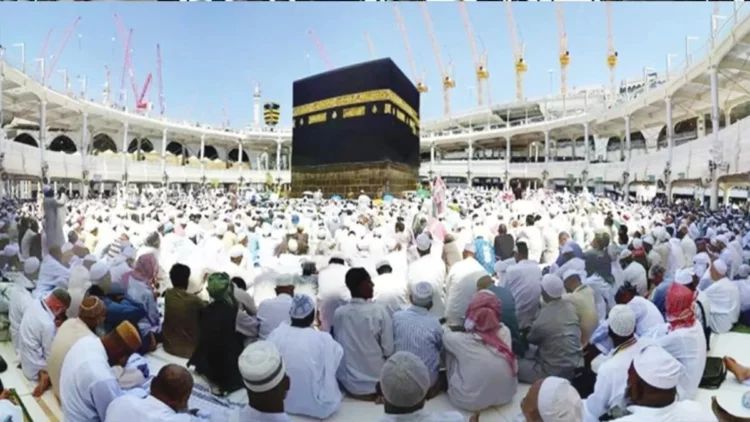
The Executive Secretary of the Ogun State Muslim Pilgrims Welfare Board, Alhaji Dauda Salau, has rated the level of preparedness of the state’s contingents in Saudi Arabia for the 2024 Hajj as high.
The Hajj, commencing on June 14, is one of the five pillars of Islam and must be undertaken at least once by all Muslims who are able.
Salau, in an interview during a Tarodudiyah (tour of the holy sites ahead of the Hajj days) with officials from the National Hajj Commission of Nigeria (NAHCON), stated that the State Governor, Prince Dapo Abiodun, had ensured that each of the 934 pilgrims from the state was fully prepared for the pilgrimage.
“Our pilgrims have been fully sensitized about the Hajj rites on a daily basis. All necessary materials to ensure smooth operations have been provided. The Governor has supported every aspect of the pilgrimage exercise, ensuring that our pilgrims lack nothing,” Salau noted.
He highlighted that arrangements had been made with service providers in Saudi Arabia to guarantee adequate tents for the Pilgrims at Arafat and other Holy Sites, adding that a Jamrat committee had equally been established to ensure smooth commuting for pilgrims during each of the Hajj rites.
The Executive Secretary explained that the Board, in conjunction with the Saudi authorities and NAHCON, had registered each pilgrim in a bus-by-bus operational arrangement, with each unit having a designated leader and assistant leader to manage the groups effectively.
On the medical front, Salau revealed that the State had deployed an unprecedented team of seven medical doctors, complemented by pharmacists and nurses, to cater to the health needs of the pilgrims.
“This comprehensive medical team ensures that our pilgrims receive the best possible care during their stay in the Holy Land,” he concluded.
Also speaking, the Commissioner for Operations, NAHCON, Alhaji (Prince) Anofi Elegushi, urged Muslim Welfare Boards across all states to continue sensitizing their pilgrims for the successful completion of the Hajj rites.
He emphasized the need for Nigerian pilgrims to conduct themselves well throughout the Hajj period, highlighting the importance of being good ambassadors of Nigeria while seeking the spiritual benefits of Hajj.
Germany has launched an online portal for foreign workers seeking to relocate and work in the country to apply for an opportunity card.
The government of Germany on its official website disclosed that the initiative is part of efforts to address the country’s labour shortage with skilled foreign workers, just as it indicated that interested persons do not need to secure a job before applying but would find employment on arrival in Germany.
According to the notice, the opportunity card is aimed at attracting skilled workers from non-European Union (EU) countries.
“It is a type of residence permit that allows individuals from third countries—nations outside the EU—to enter Germany to seek employment.
“The opportunity card operates on a points-based system with the completion of a degree or at least two years of training recognised by the state of issuance as part of the prerequisites.
“German language proficiency of least level A1 or English proficiency at level B2 of the Common European Framework of Reference for Languages (CEFR). Sufficient financial means to cover living expenses for the duration of the stay in Germany.
“The card is valid for up to one year and can be extended if the individual finds qualified employment, enabling them to obtain a subsequent residence permit for further job searching or employment,” it revealed.
The notice further said that applicants must have their professional qualifications recognised in Germany or their country of origin.
“While searching for jobs, opportunity card holders can work part-time for up to 20 hours per week and engage in trial jobs for up to two weeks to evaluate potential employment.
“Applicants for the Opportunity Card must visit Germany’s diplomatic missions in their country for visa applications,” it stated.
Two of Kwara State intending pilgrims to Saudi Arabia, Salihu Mohammed and Hawawu Mohammed, have died in Madina, Saudi Arabia.
This was disclosed by the Executive Eecretary, Kwara State Muslim Pilgrims’ Board, AbdulSalam AbdulKabir, in a statement on Sunday.
AbdulKabir said Saliu Mohammed died in an intensive care unit of a public hospital in Madina after sudden illness while Hawawu Mohammed died, “following what Saudi authorities have investigated and found to be an unfortunate suicidal episode from the rooftop of her apartment in Madina.”
“Kwara State Muslim Pilgrims Board sends heartfelt commiserations to the families of two of our pilgrims who returned to their Lord in Madina, Saudi Arabia.
“Saliu Mohammed, who arrived with Batch 3 of the state contingent, died in an intensive care unit of a public hospital in Madina after suddenly falling ill; while Hajia Hawawu Mohammed (Batch 9) also died following what Saudi authorities have investigated and found to be an unfortunate suicidal episode from the rooftop of her apartment in Madina.
“The pilgrims’ board deeply regrets these sad events, but submits totally to the decree and ultimate knowledge of Allaah in all affairs.
“The board sends profound condolences to their families and asks Allaah to grant them comfort and forgive the deceased,”the statement said.
The Immigration, Refugees, and Citizenship Canada (IRCC) is carrying out a survey on eight areas capable of bringing possible changes to the Post Graduation Work Permit (PGWP) programme for international students.
These new reforms are being considered to align international students with labour market needs just as it would reduce the overall volume of PGWP holders, the official website of IRCC has revealed.
It also disclosed that these new changes to eligibility criteria are being considered to be implemented for international students already in Canada as well as future cohorts.
The PGWP programme has been an important component in attracting international students since it provides work opportunities after the completion of a study program.
Recall that Canada has made major changes to the program this year to crack down on abuse of the system but the new move based on the 8-point survey indicates that further refinement of this programme is under consideration.
Based on questions asked in the survey to colleges and universities, it looks like students would be required to complete programs that are associated with labour shortages and satisfy new language requirements in order to qualify for PGWP after completing their study.
This would suggest programs that are designed to satisfy the educational prerequisites of the positions that are anticipated to experience labour shortages in the future.
According to the official website, this initiative would suggest programmes that are designed to satisfy the educational prerequisites of the positions that are anticipated to experience labour shortages in the future, adding that study programmes would be classified in accordance with Canada’s national occupational classification (NOC).
One part of the survey suggestted that study programmes corresponding to occupations eligible for category-based selections in the Express Entry draw are more likely to be there.
The second question of the survey is anticipated to be aimed at deciding exemptions if new PGWP eligibility criteria are set, such as for students with a high level of French proficiency or certain degree programs.
Another condition being added to the PGWP eligibility criteria has it that students will have to submit proof of a job offer in order to continue working on PGWP. This seems not to be universal, but only for study programs that will be aligned with the occupational shortage list mentioned in the first question.
Similarly, labour market-based changes to PGWP eligibility could be announced this year and the immigration department is considering whether to exempt existing students or not while
the department is asking stakeholders to determine the frequency of revisions of occupations in demand and when they should be effective.
On another hand, a survey question is aimed at determining whether the new eligibility criteria for post graduation work permits will be able to retain students in the region or province of the educational institution for the long term while another aspect of the survey seems to ensure that students are set up for a pathway to permanent residency and are proactively aligned with the eligibility requirements of the provincial nominee program (PNP) of a particular province.